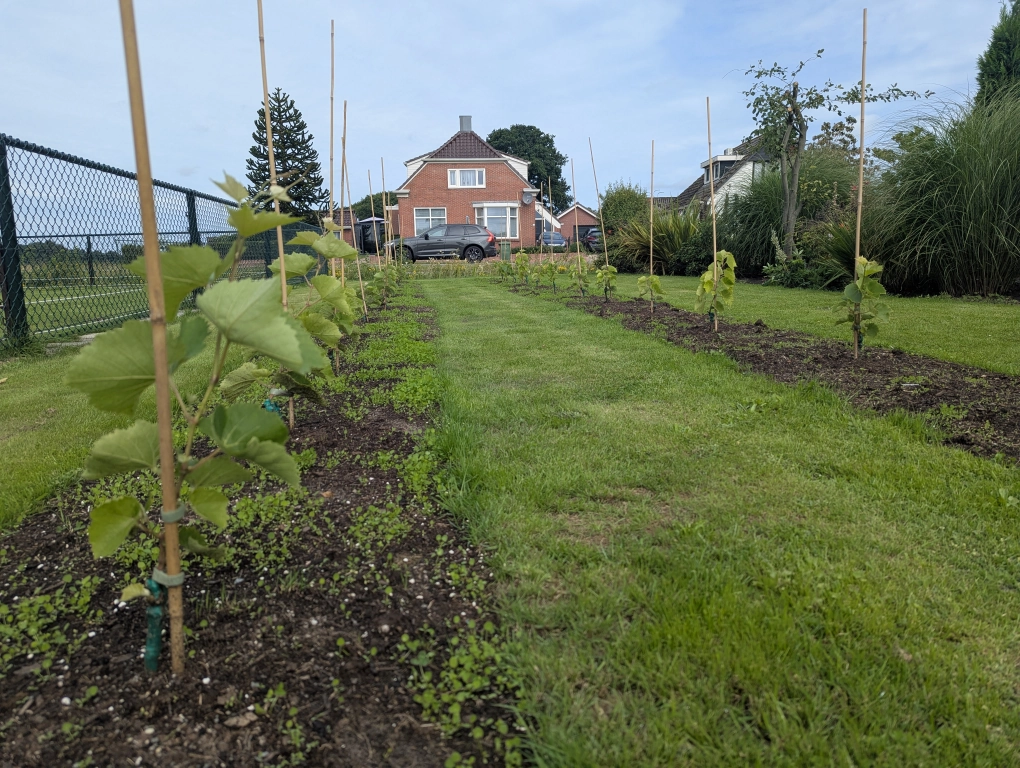
End-of-season vineyard report (2025)
Overall: very good news. No visible mildew, rot, aphids, or other pests for most of the year. Growth was vigorous for almost all vines after terraforming the soil. Lignification fully completed and the vines seem adamant on exploding next spring!
We started the season very bare-bones. No fertilizers or soil improvements at first, just cleared some grass around the vines. The idea was to see how they’d do here on their own. Planting holes were drilled to about 30 cm with an earth auger, as instructed.
Bonus discovery: there’s a random ~20-year-old white grapevine in the garden. No idea what variety it is or whether it’s good for wine, but it looks healthy and seems ungrafted. It seems to have done quite well under minimal care, and the grapes were reasonably tasty when I ate them in October. They also had seeds, so it presumably isn’t a table grape variety. I’ll prune it hard this winter and try to train it properly. Most of the grapes got stolen by the stupid birds, though. I will definitely need bird nets next year.
In late June, the vines were loosely Velcro-tied to bamboo stakes. Around late June and July, some leaves started browning. Likely causes: drought stress or magnesium deficiency. I sprayed magnesium; things improved afterward, though it’s hard to say if that was the spray or simply less sun and more moisture.
Soil testing in mid-July confirmed what we suspected: the soil is poor and very acidic (around pH 4.5). This was my first time using a soil test kit, so accuracy is uncertain, but it fits the picture. Early growth looked promising, but things stalled around July. The vines stayed small, which was a bit depressing. Grass competition probably played a big role by stealing water and nitrogen. At that point, I abandoned the “pure observation” experiment and stepped in.
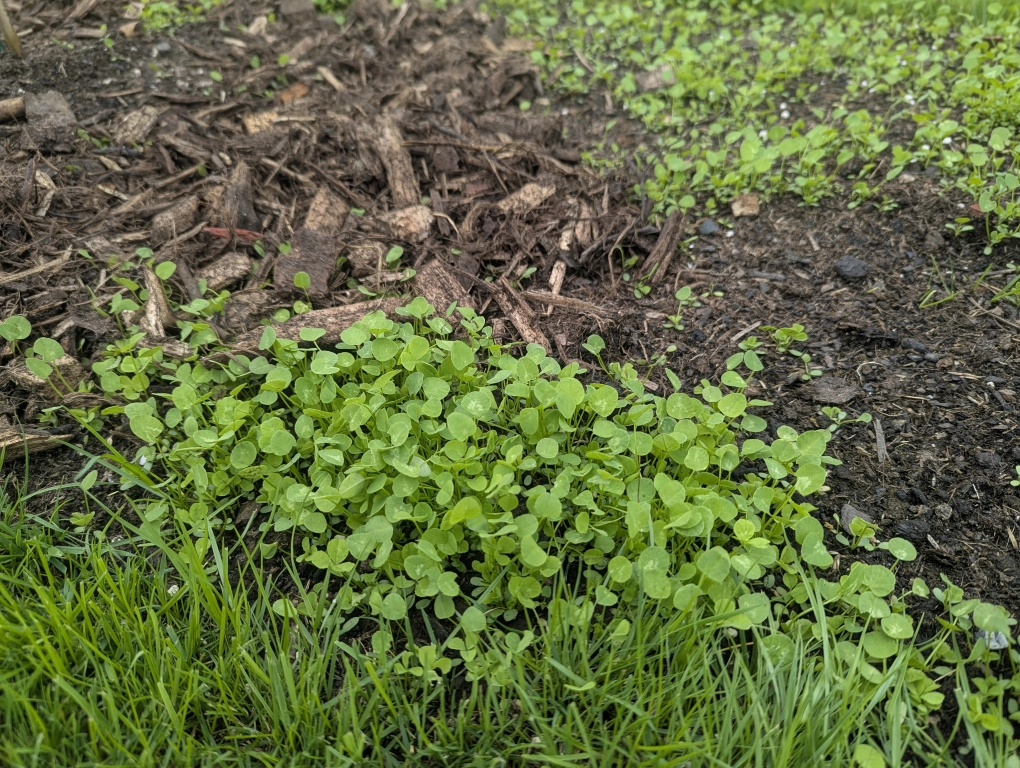
The original plan was to sow white clover (Trifolium repens), but with such young vines that felt risky, especially for weed control. Instead, I went with wood chips as mulch. Of course, I had already planted the clover and they became an annoyance (see pictures below). It didn’t take long until all sorts of shroomies popped up in the mulch. Presumably a sign that the soil is alive and cycling resources.
In August and September, the vines suddenly took off. Growth was strong enough that I built a basic trellis in late September. Right now it’s just one wire; a lower wire will be added Soon™. Quite possibly this was the result of the terraforming?
By October, only two leaves (out of 25 plants) showed downy mildew: not bad. Some other leaves had black spots (not identified; possibly black rot or botrytis), but overall fungal damage was very minor. A preventative sulphur spray is planned for early spring.
There are only two vines which are very small still, but I have a good feeling they’ll catch up next year. They’ve seemed to be healthy overall the entire year, their size notwithstanding.
I was slightly worried in October and early November that lignification was lagging. Then, almost suddenly, it caught up fast. By early December, lignification was fully complete.
Mid summer terraforming
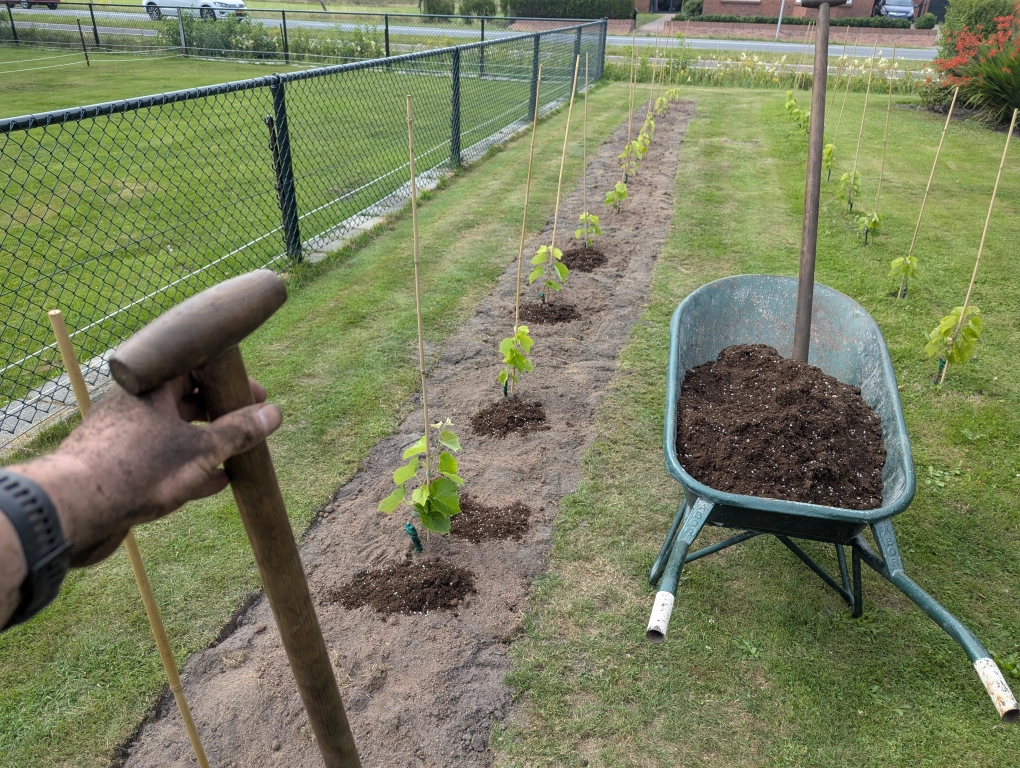
Done in mid July, took the entire damn weekend.
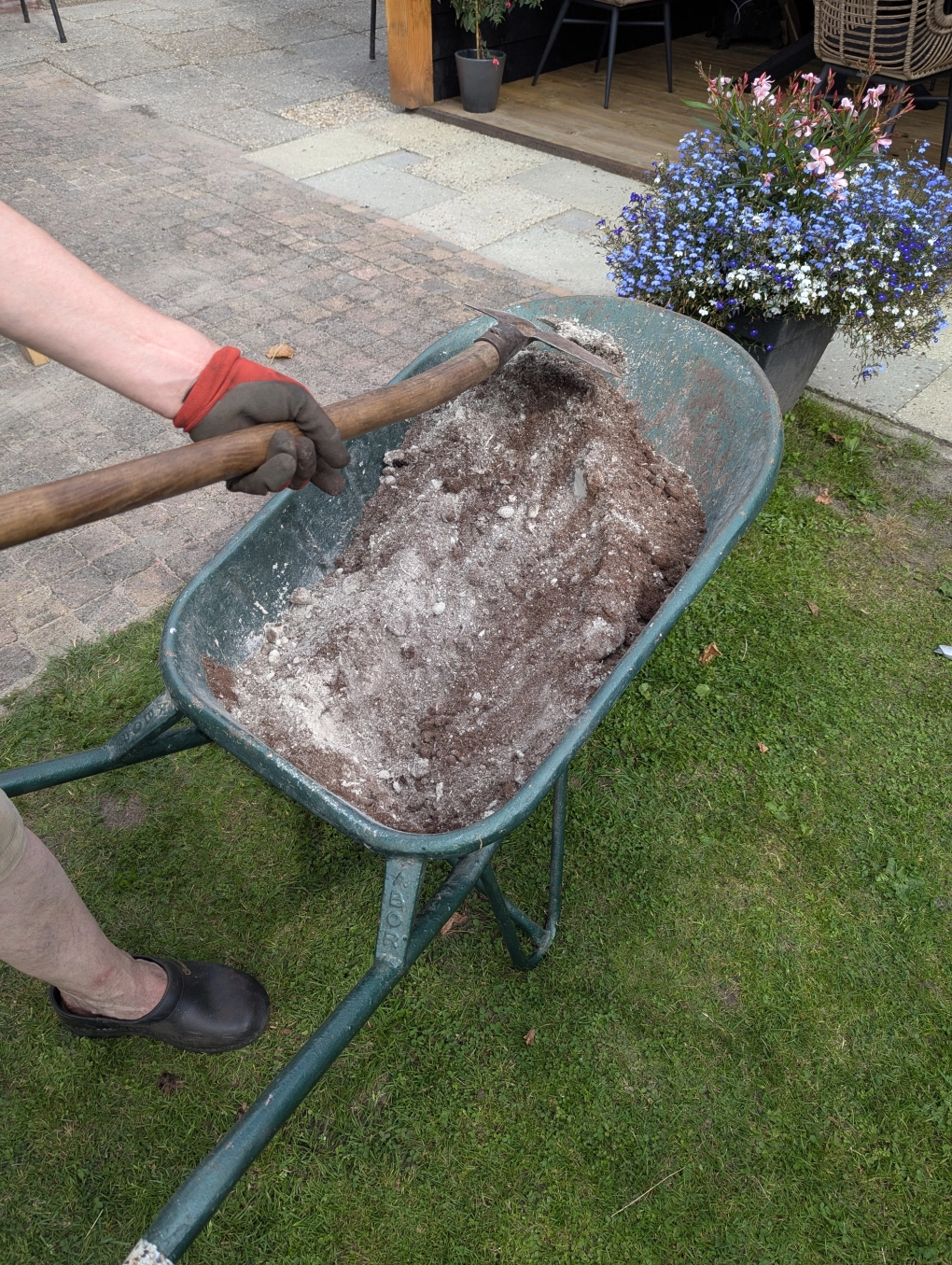
The soil was terraformed with:
- 20kg of lava grit
- 20kg of lava meal
- 3.5kg of bone meal
- 5kg of bentonite
- 40L of bio compost
- 10kg of chalk pellets
- And 420L of bio planting soil to top it all off
Behold this Holy Dry Mix here:
Mulching was done at 2025-08-04 with 500l. Don’t get mulch from the Praxis; it contains some traces of plastic and glass. I scattered white clover before I decided I would just mulch instead. Although I attempted to cover the clover completely, those pesky bastards seem to grow straight through the mulch. Ah well. At least they’re pretty in the pictures.
Terrforming project progress pictures
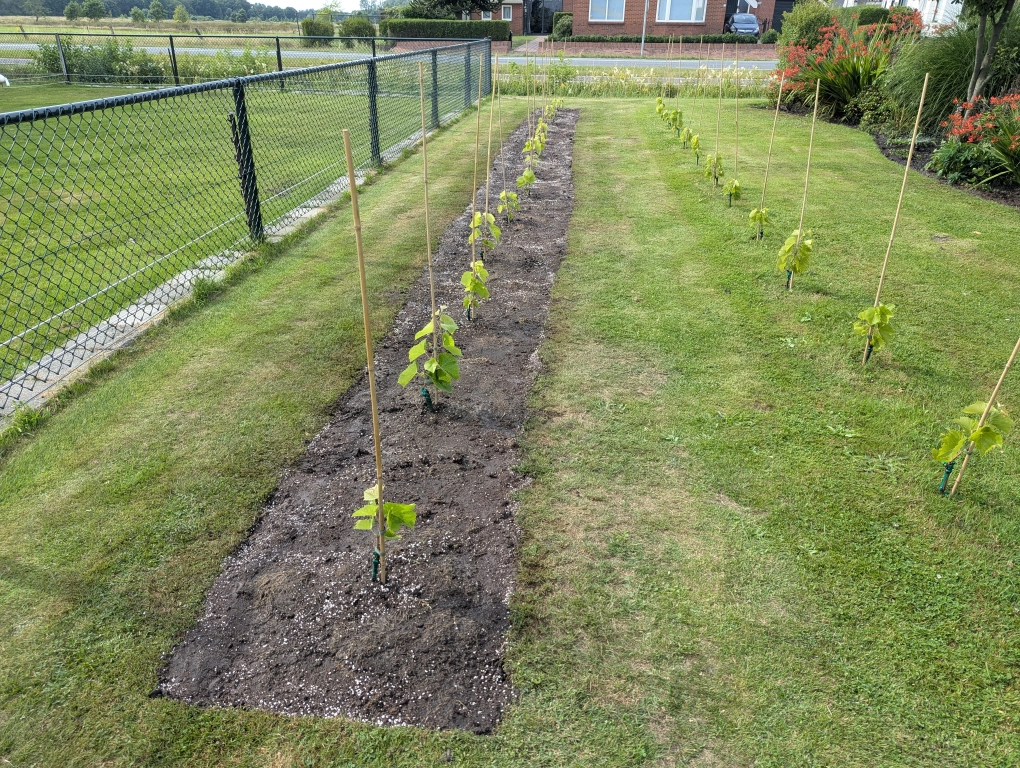
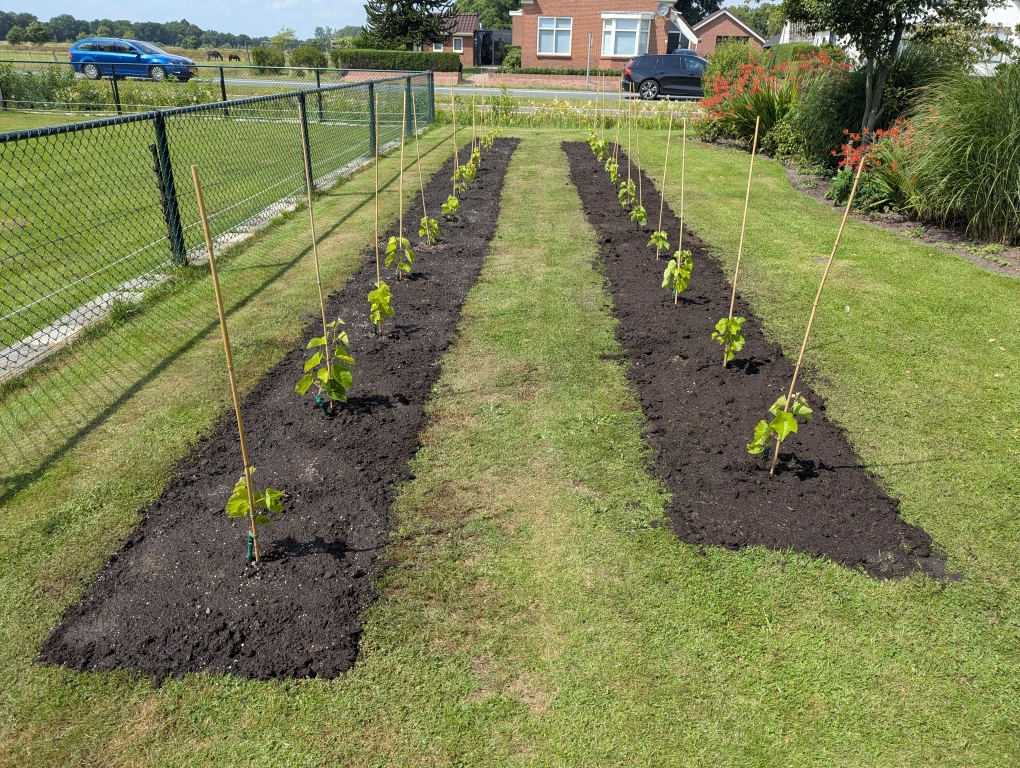
White clover overrunning the soil